Auto transport: shipping cars, trucks and machinery
From a single sedan to a fleet of work trucks or a piece of heavy machinery, here is how vehicles actually get from A to B, and what to check before you hand over the keys.
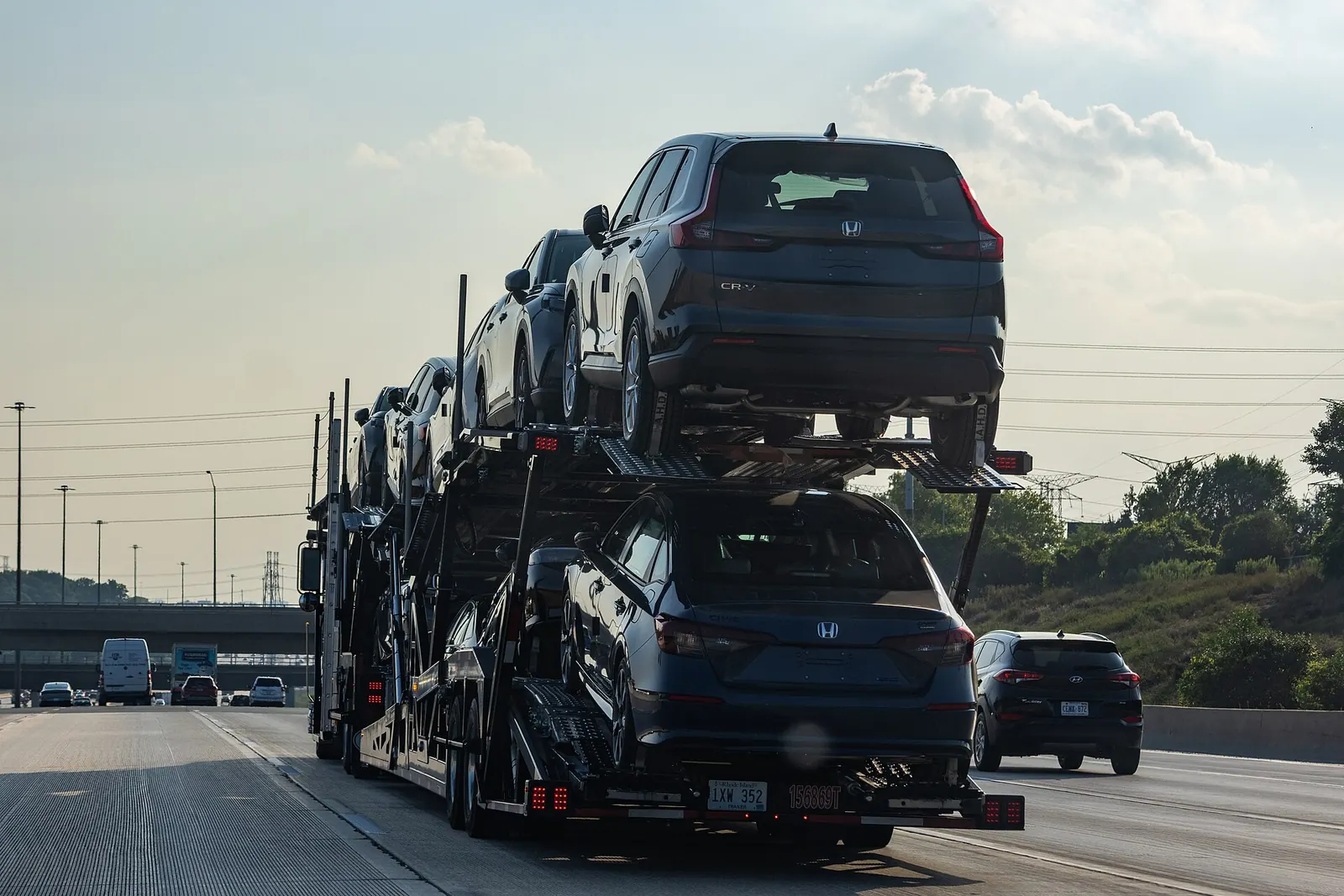
Vehicle transport is its own corner of the freight industry, with dedicated equipment, its own inspection paperwork and a mix of carriers and brokers. The options below cover domestic road transport as well as international moves by sea.
Open vs. enclosed car carriers
Open carriers are the two-level trailers you see on the interstate, typically carrying seven to ten vehicles. They are the most common and most affordable option, and are used to deliver most new cars to dealerships. Vehicles are exposed to weather and road debris, much as they would be when driven.
Enclosed carriers protect vehicles inside a hard-sided or soft-sided trailer and usually carry fewer units, often with liftgates instead of ramps for low-clearance cars. Expect to pay noticeably more; they are the norm for classic, exotic and high-value vehicles.
For one or two vehicles over short distances, hotshot or wedge trailers pulled by heavy-duty pickups are also common.
What can be shipped
- Cars, SUVs, pickups and vans
- Motorcycles (crated or on specialized racks)
- Tractor units and box trucks, by drive-away, tow-away or on a lowboy
- Construction and agricultural machinery on step-deck, RGN or lowboy trailers
- Boats on hydraulic boat trailers or, for larger vessels, as oversize loads

RoRo: roll-on/roll-off shipping
For international moves, RoRo is often the most economical option for running vehicles. Cars are driven onto a purpose-built vessel, secured on internal decks and driven off at the destination port. Because they are stowed below deck, they are protected from the weather. RoRo usually requires the vehicle to be in running condition and free of personal belongings.
Container shipping for vehicles
Shipping a vehicle inside a 20' or 40' container costs more but offers extra protection and allows non-running vehicles. A 40' container can often fit two to four cars on racking. It is the usual choice for classic cars, for vehicles shipped alongside household goods, and for routes without regular RoRo service.
Break bulk
Items too large for a container or a RoRo deck (mining equipment, large boats, oversized machinery) can be shipped as break bulk: lifted aboard individually by crane and secured in the hold or on deck. It requires careful engineering and is quoted case by case.
What affects the cost
- Distance and route (major interstate corridors are cheaper than rural pickups)
- Vehicle size, weight and whether it runs
- Open vs. enclosed transport
- Season (snowbird routes, summer moves and model-year changeovers are busy)
- Pickup flexibility; a wider pickup window usually lowers the price
How to prepare a vehicle for transport
- Wash the vehicle so existing damage is visible, then photograph every side, with timestamps.
- Remove personal items and toll tags; carriers are not licensed or insured to carry household goods in vehicles.
- Leave about a quarter tank of fuel.
- Note mechanical issues (leaks, brakes, non-running) when you book.
- Inspect with the driver and sign the bill of lading condition report at pickup, then do the same at delivery before signing.
Auto transport FAQ
How long does it take to ship a car across the country?
Typically 7–14 days coast to coast, including time to assign a carrier. Shorter regional moves are often two to five days.
Is my car insured during transport?
Carriers must carry cargo insurance, but limits and deductibles vary. Ask for the certificate and check your own auto policy as well.
Can I put items in the trunk?
Many carriers allow a small amount under a weight limit, but it is not covered by their insurance. Ask first.