Full truckload shipping: the complete guide
When your freight fills a trailer, or simply can't afford to be handled twice, full truckload is the simplest, fastest way to move it.
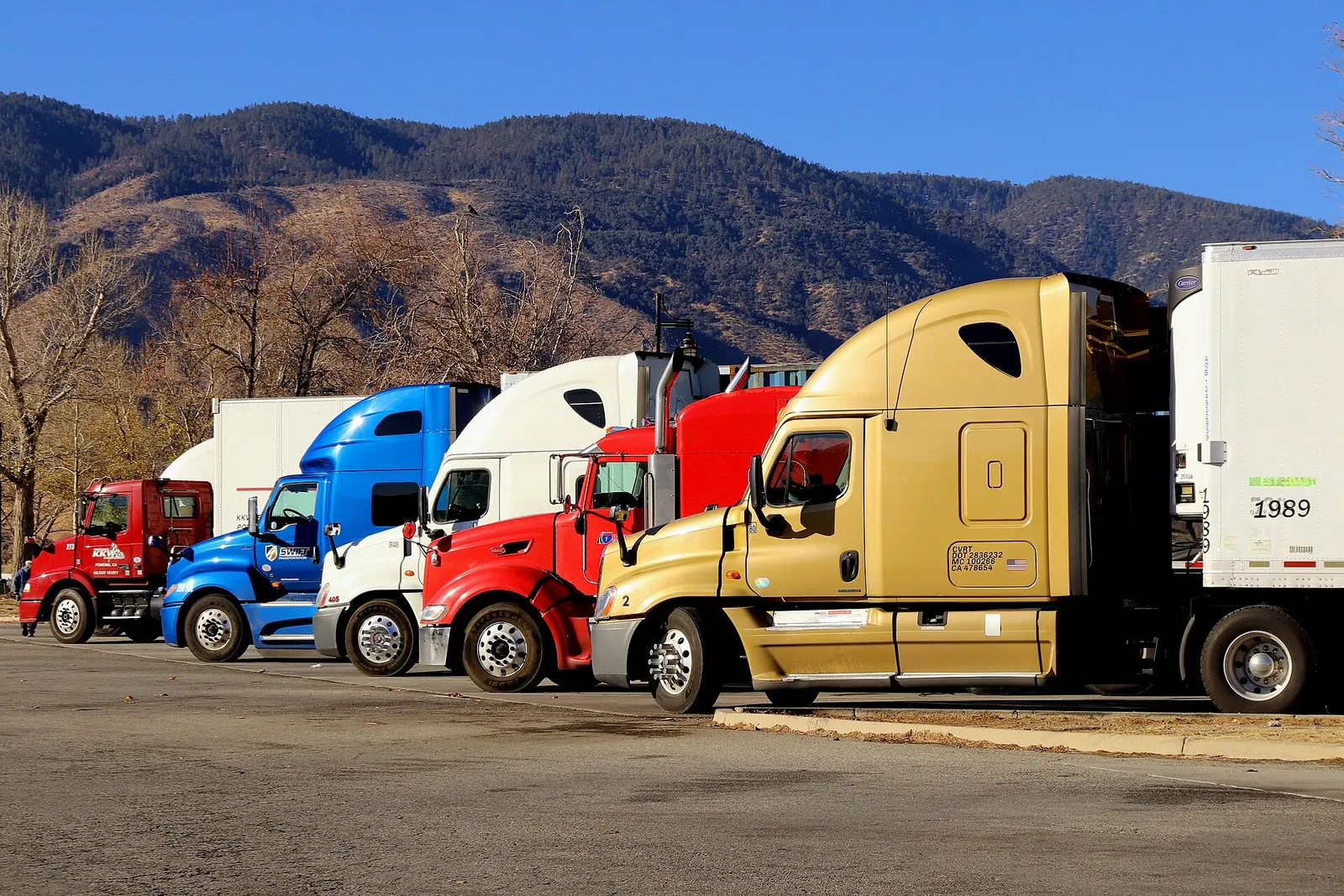
Full truckload (FTL, or simply TL) means one shipper's freight occupies a whole trailer. The truck picks up, seals the doors and drives directly to the consignee. There are no terminal transfers and no other customers' freight on board. That simplicity is exactly why truckload is the backbone of North American freight.
When full truckload makes sense
- Volume: roughly 10 or more standard pallets, or more than about half the trailer's floor space.
- Weight: shipments above about 15,000 lb, where LTL pricing by hundredweight becomes expensive.
- Fragility: freight that would be at risk if it were cross-docked through LTL terminals.
- Time: firm delivery appointments. A truckload driver goes straight there, often hundreds of miles a day.
- Security: high-value goods that benefit from a sealed trailer from origin to destination.
Trailer types and capacity
| Trailer | Interior (approx.) | Standard pallets | Typical max cargo weight |
|---|---|---|---|
| 53' dry van | 52'6" L × 8'2" W × 8'10" H | 26 single-stacked (48"×40") | 42,000–45,000 lb |
| 53' reefer | Slightly narrower and shorter than a van due to insulation | 26 | 40,000–43,000 lb |
| 48' flatbed | 48' × 8'6" deck | Open-deck, measured by length | ~48,000 lb |
| Step deck | Upper 10–11', lower ~37–38' | Open-deck | ~45,000 lb, taller freight |
In the US, a five-axle tractor-trailer is generally limited to 80,000 lb gross vehicle weight on interstates, so the cargo limit depends on how heavy the tractor and trailer are. Canadian provinces set their own limits, which are often higher. Always give your carrier the real weight: overweight loads are refused or fined at scales.
How truckload rates are priced
Truckload quotes are usually an all-in figure for the lane, but under the hood they are built from a few parts:
- Linehaul: the per-mile or flat rate for the trip. It is driven by distance, equipment type and how much freight is leaving the destination market (trucks heading into areas with little outbound freight cost more, because the carrier may run empty afterward).
- Fuel surcharge: often indexed to the weekly national diesel average. Some quotes bundle it in; others list it separately.
- Accessorials: extra stops, driver assist (unloading), tarping, detention after the free time (commonly two hours) and layovers.
Rates also move with the market. Spot rates are for a single load at today's price; contract rates are agreed for months at a time in exchange for committed volume. In a tight market, spot climbs above contract; in a loose market it falls below. Try our freight cost estimator for a quick ballpark.
Transit times
A solo driver is limited by federal hours-of-service rules to 11 hours of driving within a 14-hour on-duty window, which typically works out to 450–550 miles a day. Team drivers alternate and can cover 1,000+ miles a day, which is useful for cross-country, time-critical freight. As a rule of thumb, plan one transit day per 500 miles for solo service, plus loading time.
Partial truckload: the middle ground
If you have 6 to 14 pallets, ask for a partial truckload (sometimes called volume LTL) quote. Partial loads share a truck with one or two other shipments but skip the terminal network, so you get near-truckload handling at a lower price. They are priced on linear feet of trailer used rather than freight class.
Tips for a smooth truckload shipment
- Confirm dock hours and appointment rules at both ends before you book.
- Have freight palletized, wrapped and labeled before the truck arrives; floor-loaded freight takes far longer.
- Put special instructions (temperature, seal numbers, load bars) on the bill of lading, not just in an email.
- Count pallets and photograph the load before doors close; the driver signs for what they see.
- Track detention start and end times. Disputes are easier with timestamps.
New to booking trucks? Our step-by-step guide to booking a full truckload covers the process from quote to proof of delivery.
Full truckload FAQ
What is the difference between FTL and TL?
Nothing. FTL (full truckload) and TL (truckload) are used interchangeably.
Can I ship a full truckload if I only have 12 pallets?
Yes. You pay for the whole trailer regardless of how full it is. Compare the price with a partial truckload or volume LTL quote before deciding.
Is full truckload cheaper per pallet than LTL?
Once you pass roughly 10–12 pallets it usually is, because LTL pricing grows with weight and class while a truckload price is fixed for the trailer.
How far in advance should I book a truckload?
Two to five business days is comfortable for most lanes. Same-day and next-day capacity exists but costs more, especially at month-end, quarter-end and holiday peaks.