Less than truckload (LTL) shipping
LTL lets you ship a few pallets at a fraction of the cost of a full truck, provided you understand freight class, accessorials and packaging.
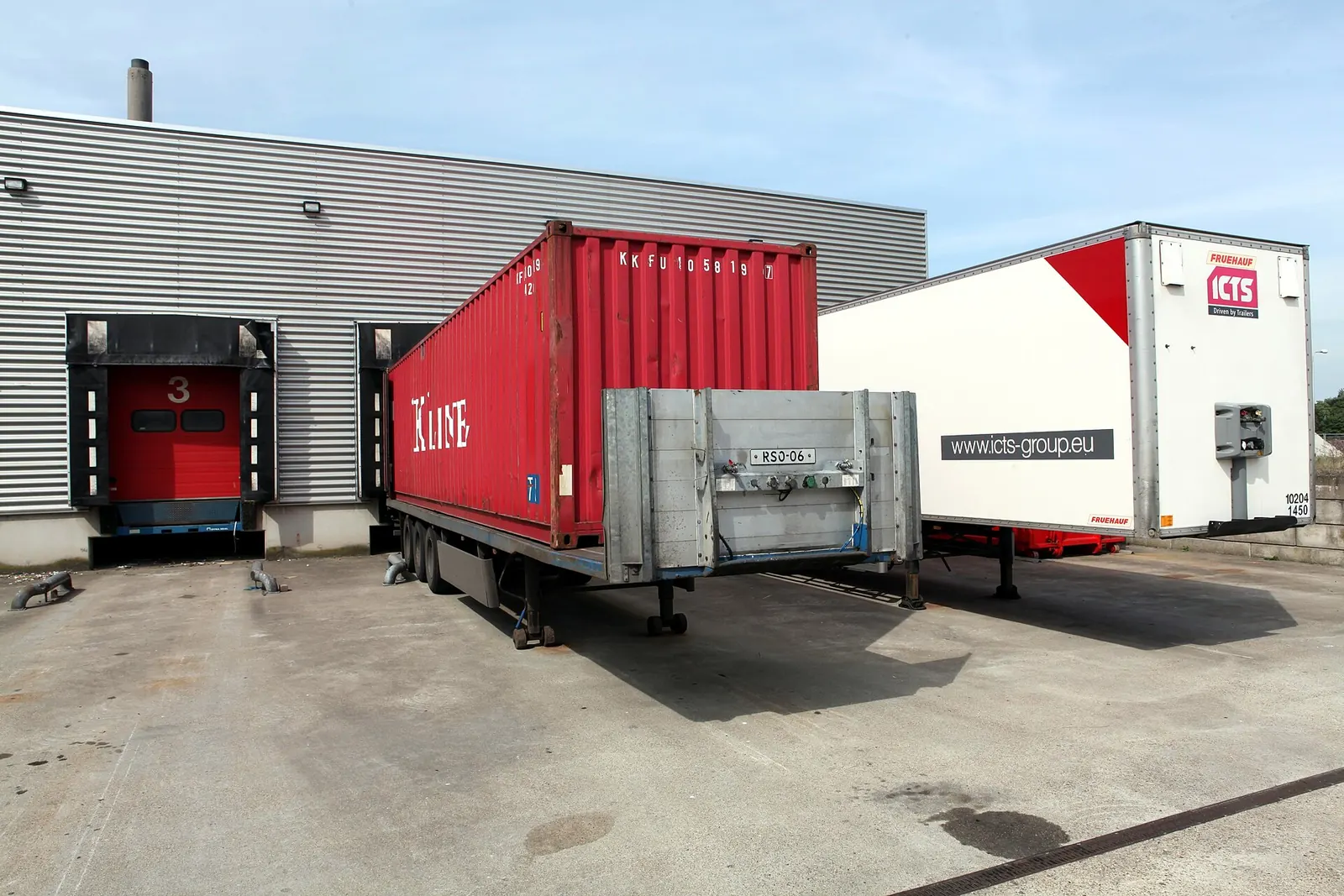
Less than truckload (LTL) is designed for shipments too big for parcel carriers and too small to justify a whole trailer: typically one to six pallets weighing from about 150 lb up to 10,000–15,000 lb. Your freight shares space with other shippers' freight, so you only pay for the portion of the trailer you use.
How an LTL network works
LTL carriers run a hub-and-spoke system. A local pickup truck collects freight from many shippers in the afternoon and brings it to an origin terminal. Overnight, freight is sorted by destination and loaded onto linehaul trailers that run to break-bulk hubs or straight to destination terminals. A local delivery truck then completes the final mile.
That network is what makes LTL affordable, and it is also why freight gets handled several times. Good packaging is not optional.
Freight class and density
In the US, most LTL pricing is tied to the National Motor Freight Classification (NMFC), which places commodities into 18 classes from 50 (dense, durable, easy to handle) up to 500 (light, bulky or fragile). Higher class means a higher rate per hundredweight. In recent years the NMFC has shifted many commodities to purely density-based classes, so measuring accurately has become even more important.
Density is calculated in pounds per cubic foot (PCF):
Density = weight (lb) ÷ (length × width × height in inches ÷ 1,728)
Example: a 48" × 40" × 50" pallet weighing 600 lb is 55.6 cubic feet, so its density is about 10.8 PCF.
| Density (PCF) | Class (traditional density scale)* |
|---|---|
| 50 or more | 50 |
| 35 – 50 | 55 |
| 30 – 35 | 60 |
| 22.5 – 30 | 65 |
| 15 – 22.5 | 70 |
| 13.5 – 15 | 77.5 |
| 12 – 13.5 | 85 |
| 10.5 – 12 | 92.5 |
| 9 – 10.5 | 100 |
| 8 – 9 | 110 |
| 7 – 8 | 125 |
| 6 – 7 | 150 |
| 5 – 6 | 175 |
| 4 – 5 | 200 |
| 3 – 4 | 250 |
| 2 – 3 | 300 |
| 1 – 2 | 400 |
| Less than 1 | 500 |
*Shown for illustration. The NMFC's current density scale and your commodity's specific item number determine the actual class. Ask your carrier or check the current NMFC.
Canadian LTL carriers often price by weight and cubic space (or a minimum density) rather than NMFC class, but the principle is the same: light, bulky freight costs more per pound.
Accessorial charges to plan for
- Liftgate: needed when the pickup or delivery location has no dock.
- Residential delivery: homes and home-based businesses.
- Limited access: schools, churches, construction sites, farms, military bases, storage units.
- Inside delivery: moving freight beyond the dock door or threshold.
- Appointment or notify-before-delivery: the carrier calls ahead to schedule.
- Reweigh and reclassification: billed when the carrier's measured weight or class differs from your bill of lading.
Declaring these up front costs far less than having them added after delivery.
LTL transportation between Canada and the U.S.
Cross-border LTL works through the same terminal networks, but each shipment needs customs documents and a customs broker on both sides. Carriers must transmit electronic manifests before arrival (ACE for the US, ACI eManifest for Canada), so the commercial invoice and broker details must be ready at pickup, not at the border. See the cross-border guide for the full checklist.
Seven ways to lower LTL costs
- Measure and weigh every shipment; inaccurate dimensions trigger reclass fees.
- Build pallets square and tight. Overhang raises the cube and the damage risk.
- Make freight stackable when possible; non-stackable pallets are often charged for the space above them.
- Consolidate several small orders into one weekly shipment.
- Ship from and to docks to avoid liftgate fees.
- Ask for volume LTL or partial truckload quotes above six pallets.
- Compare quotes on the same assumptions using our quote checklist.
Ready to book? Follow our step-by-step LTL shipping walkthrough.
LTL FAQ
How long does LTL shipping take?
Regional LTL lanes are often one to three business days; coast-to-coast service is commonly five to seven. Transit is quoted in business days and excludes the pickup day.
What is the maximum size for an LTL shipment?
It varies by carrier, but many treat shipments over about 10–12 linear feet of trailer, six pallets or 10,000 lb as volume shipments that need a special quote.
Do I need to palletize LTL freight?
Almost always. Loose cartons are more likely to be lost or damaged and some carriers charge extra or refuse them.
Who determines the freight class?
The shipper declares it on the bill of lading, based on the NMFC. Carriers may inspect and reclassify freight if it doesn't match.